Composting is an important part of an organic, sustainable garden. Making my own compost is more than just about not having to pay for it, or not having to use fertilizers. It is about consumption and giving.
Part of being a consumer is making waste. When I eat a carrot the tops and tips are left over. Those could go into my garbage and into a landfill, or they can go into my compost and give back to the soil they took from. When I use eggs, the shells are left over, they could sit in a landfill or go into my compost and create a calcium rich soil that will nourish me and my chickens later.
There are many websites out there that give proper information on composting and will give you the ratios of different materials needed for optimum composting. When I read those I find my eyes glazing over and I go back to my lazy ways. I have had a few people ask me what I do, so I figured I would share, and expose myself for what I am: a lazy composter.
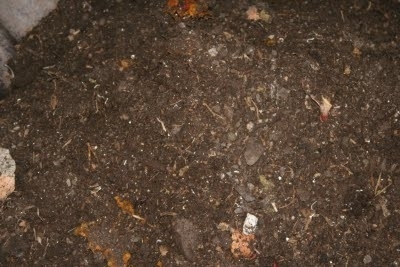
I only have one compost pile going. If I had more room there would be three: one for feeding, one for cooking and one for pulling. Right now I do all three in the same pile, and it works fine for me.
The first thing you need when starting a compost pile is a place to put it, it needs to sit and cook for weeks and months, so pick a place that is out of the way and will not be needed. Mine is right next to the shed and the chicken run.
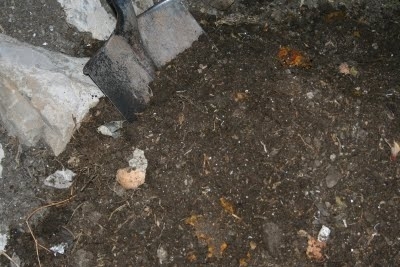 Then you just add organic material.
I put in fruit and vegetable scraps, paper (shredded, come and try to steal my identity….my bills are composting in chicken manure!), old bread, egg shells, leaves, garden waste, and animal manure. Egg shells will take sometime to break down, I try to break them up a bit when I am turning the pile. Eggs shells enrich the soil with calcium and other trace minerals, which will, in your garden, make your vegetables richer in minerals. If it isn’t in the soil it won’t be in your food.
I don’t put meats, weeds, cooked foods or woody plants in my compost. If you have a wood chipper or are willing to cut up woody plants and trimmings you can add them, they just take a long time to break down, so I don’t bother.
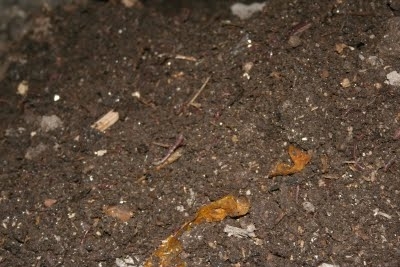 (can you see the worms?)
Any kitchen scraps, including meats I give to the chickens. Then later I add the chicken dropping to the compost, that is a good way to make you food waste work for you.
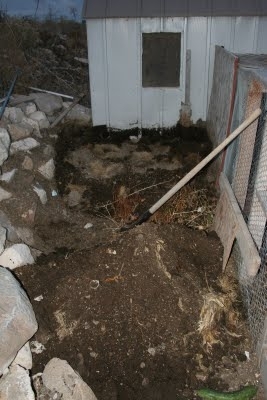
Depending on the time of year I work my pile differently. During the summer I add everything to the pile and cover it with compost. It then gets turned and watered weekly and everything breaks down very fast.
During the winter, I put it to bed and let it sit and cook. Because we freeze around my parts, the breaking down process slows, but in the center of the pile the process will go on. There have been times on cold February days that I will open the pile and it will be steaming and the worms will be working away.
Monday we prepared the bed for winter. First we moved it to the side and added back some of the compost to the pile area, about a foot worth.
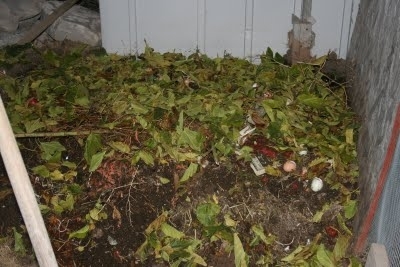
Then we started to layer. It doesn’t matter the order, but layering keeps things from rotting, if you have a whole bunch of vegetable matter in one spot it will rot and not compost. We started with a good layer of leaves.
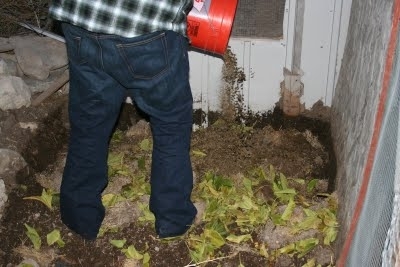
Then added a layer of rabbit manure.
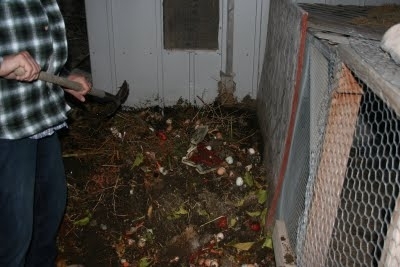
Then a layer of vegetable scraps, paper and egg shells.
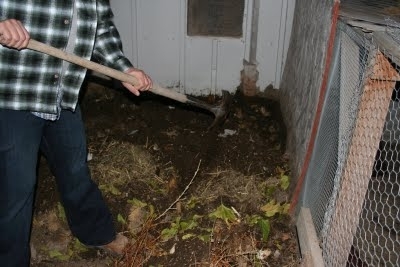
Then a nice thick layer of compost.
We repeated this process over and over until all the material was used.
We will let this sit, mostly undisturbed for the winter. The center will stay nice and warm and all the good organisms will be able to do their work.
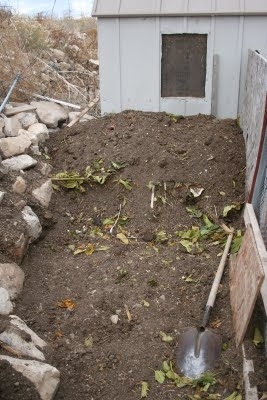
Here is a picture the next day. I will start piling my scraps to the side and cover with dirt, in the spring we will add them to the main pile.
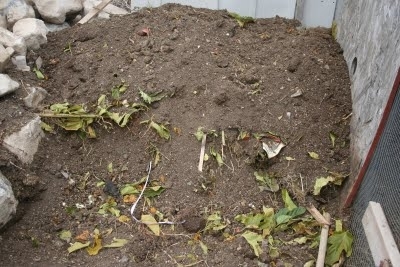
Worms are a great addition to any compost pile. We purchased ours at a local nursery, but you can get them on-line too. We got ours about 3 years ago and they are still going strong. When we first moved here you never saw a worm, ever, but now with the moving the wormy compost around I see them all the time. Worms in the soil indicate healthy soil. I love turning over a shovel full of compost and seeing it wiggly with worms!
Also, you can compost in all sorts of containers. There are nice barrel composters that can be rather expensive, or a plastic garbage can with holes int he bottom work too. Do an on-line search, there are many, many ways of doing it.
While I can’t consider my garden organic, I have been known to use some pesticides, I would like to press upon you a very simple concept. While using basic fertilizers we can grow big plants. That doesn’t necessarily mean they are the most healthy or nutritious. Carrots may tend to have a lot of Vitamin A in them, but if there isn’t all the various macronutrients present in their environment they won’t produce as much or as high of quality. While I think there is a time and place for commercial fertilizers, in general I think it has made the quality of our food go down. If you truly want to provide superior produce for you family using compost is a must!